Work Zone Brief · November 2026
We count the crashes, not the close calls
Carolin Ross, Co-Founder, RoadDefender Works
Download the slide-ready chartsThe number

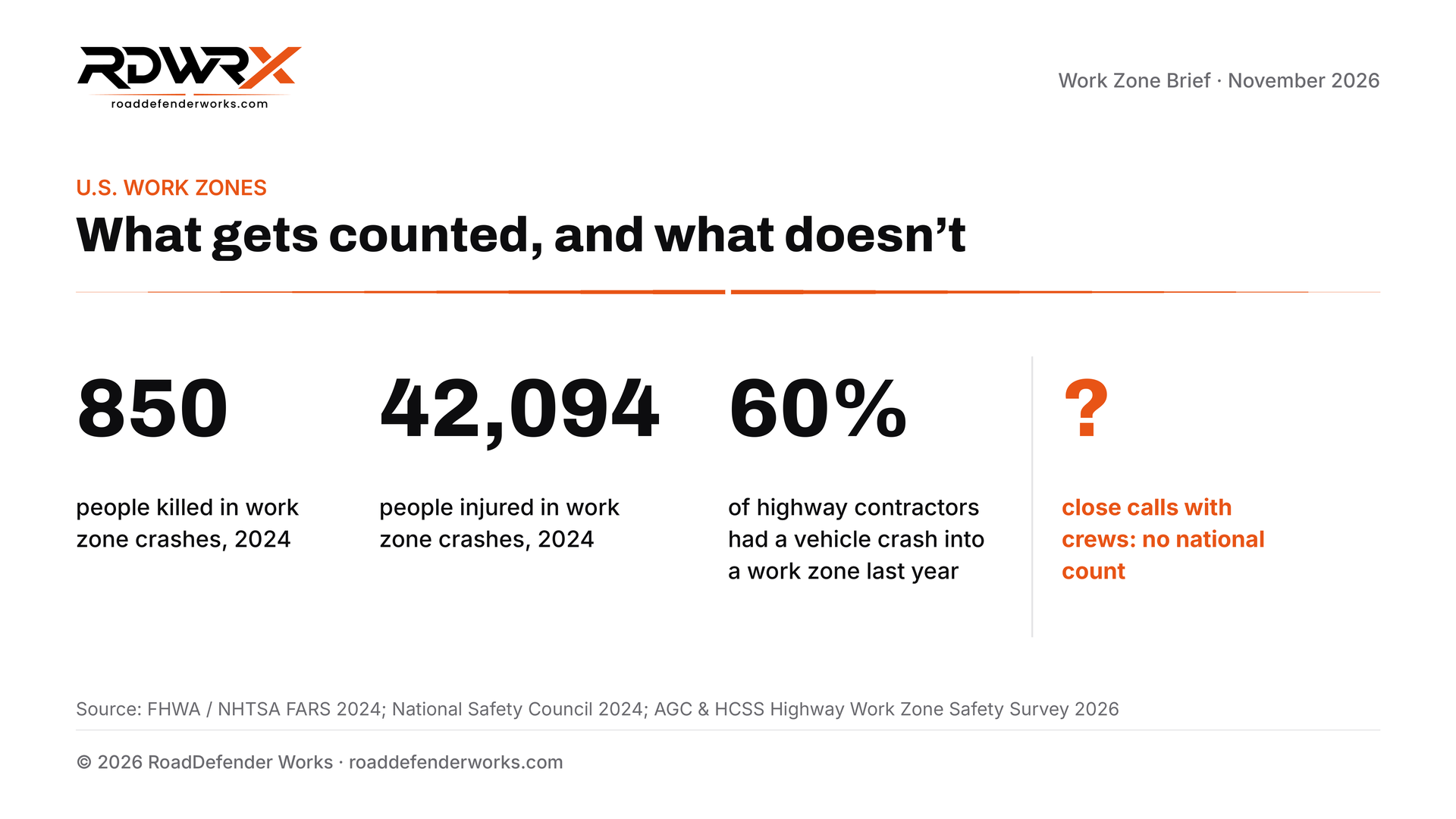
Every work zone death and injury gets counted. The shifts where something almost happened don't show up anywhere.
Why it matters
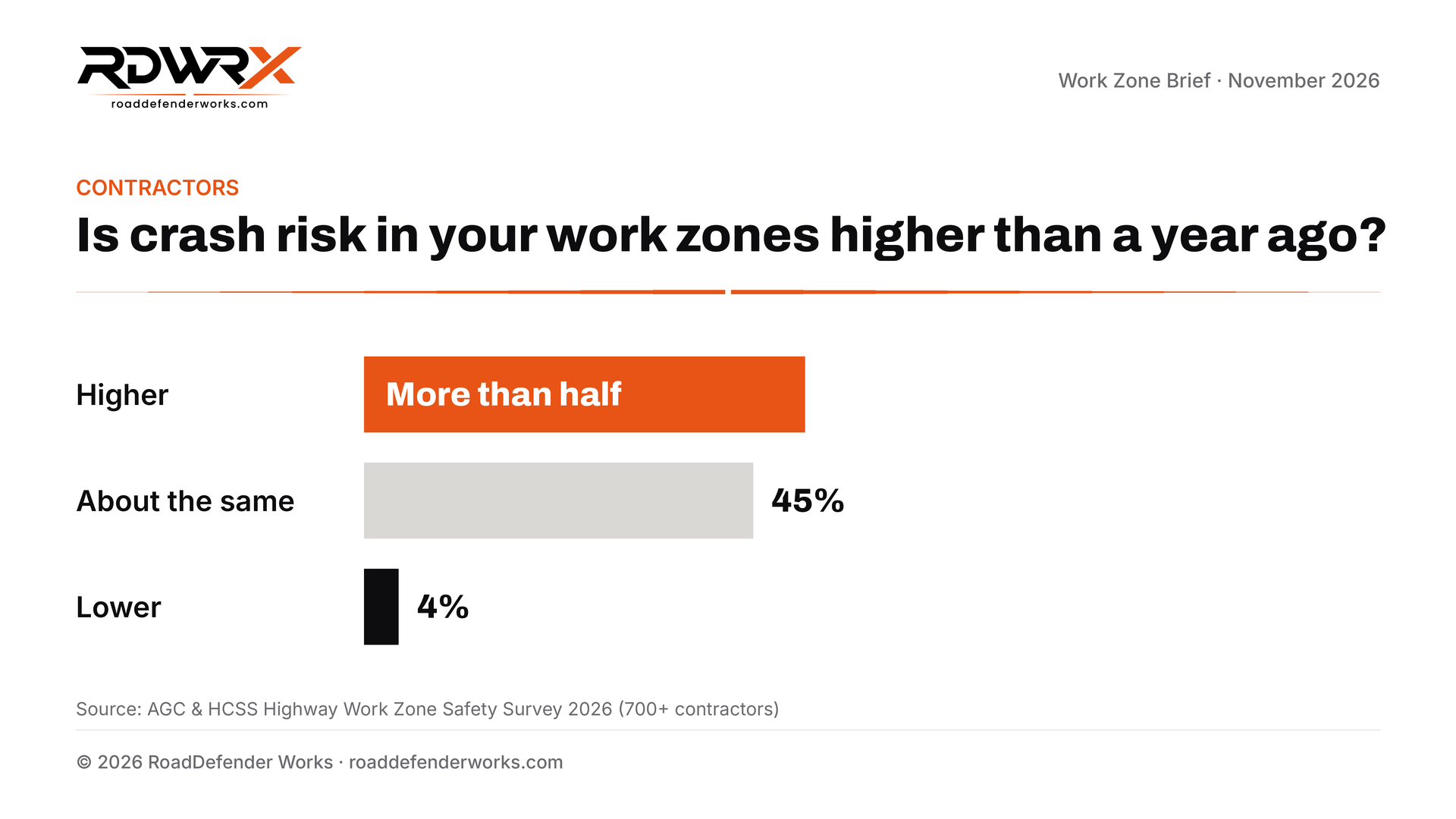
Work zone deaths are up 45% since 2010, and more than half of highway contractors say crash risk in their zones rose this year. When the only data is the crash, a safety program ends up managing the last incident instead of the next one.

What changed
States must comply with the updated federal work zone rule by December 31. Each state needs yearly safety measures, and the rule names exposure and surrogate data alongside crash data. Expect it to show up in 2027 plans and pay items. Federal Register
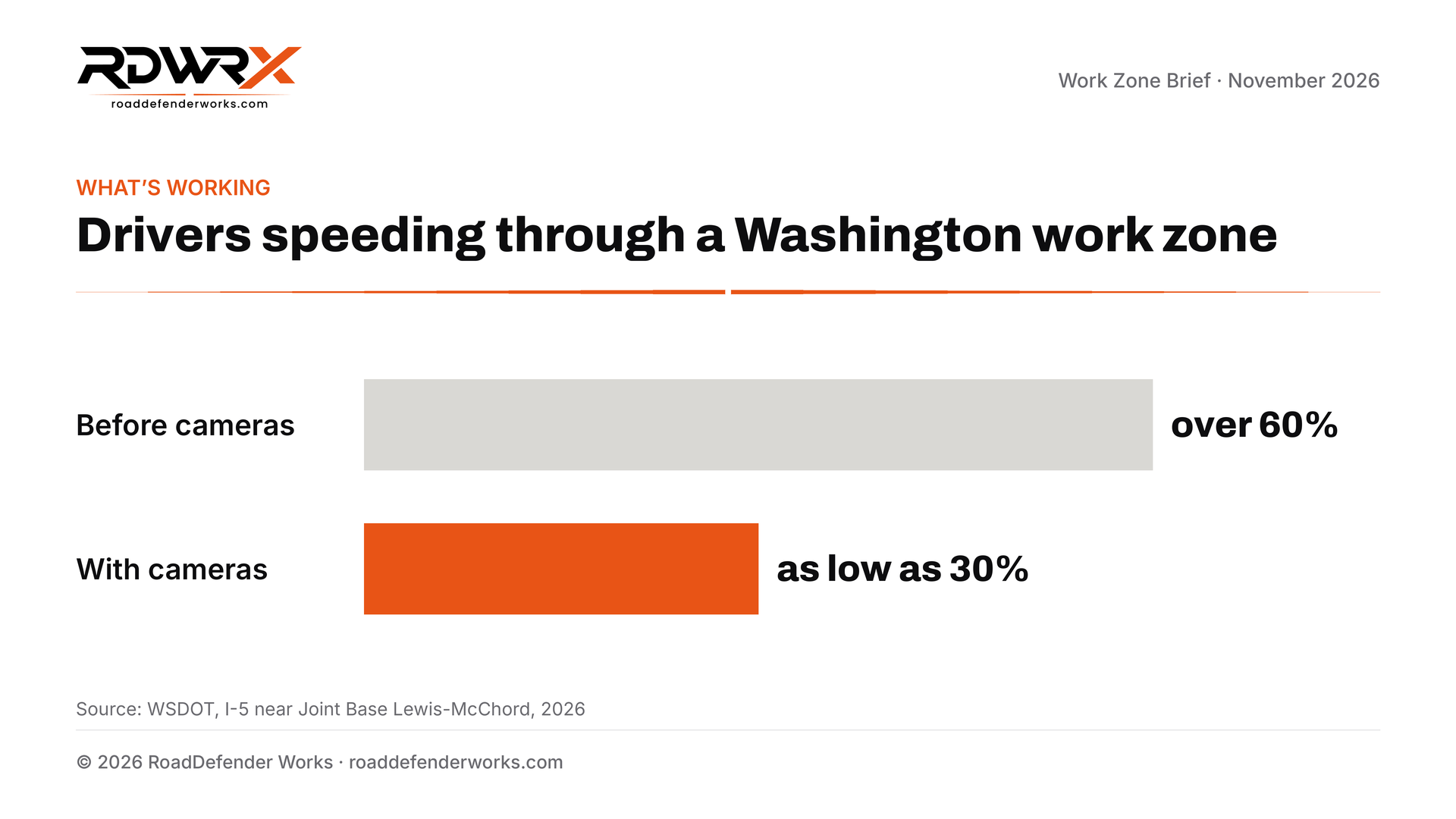
Kentucky took work zone speed cameras statewide in September. They run only while crews are present, and an officer reviews every alert. Washington's program shows what that can do to speeds. The Lane Report

MnDOT field-tested alerts worn by maintenance crews. Workers found them clear and comfortable to wear. Larger field tests are the next step. MnDOT research
Try this
Pull last year's incident log and count the entries that describe something that almost happened. If the answer is close to zero, the log is only seeing the end of the story.
One take
Most work zone tools watch traffic. Fewer ask what the worker knows in the moment. The new rule is a chance to start counting the shift, not just the crash.
Ask yourself
If a vehicle came too close to one of your crews yesterday, would anyone above the foreman know about it today?