Work Zone Brief · October 2026
We count the crashes, not the close calls
Carolin Ross, Co-Founder, RoadDefender Works
Published
Slide-ready charts · free to use
Three sourced charts for your next safety meeting or board report.
Guess first
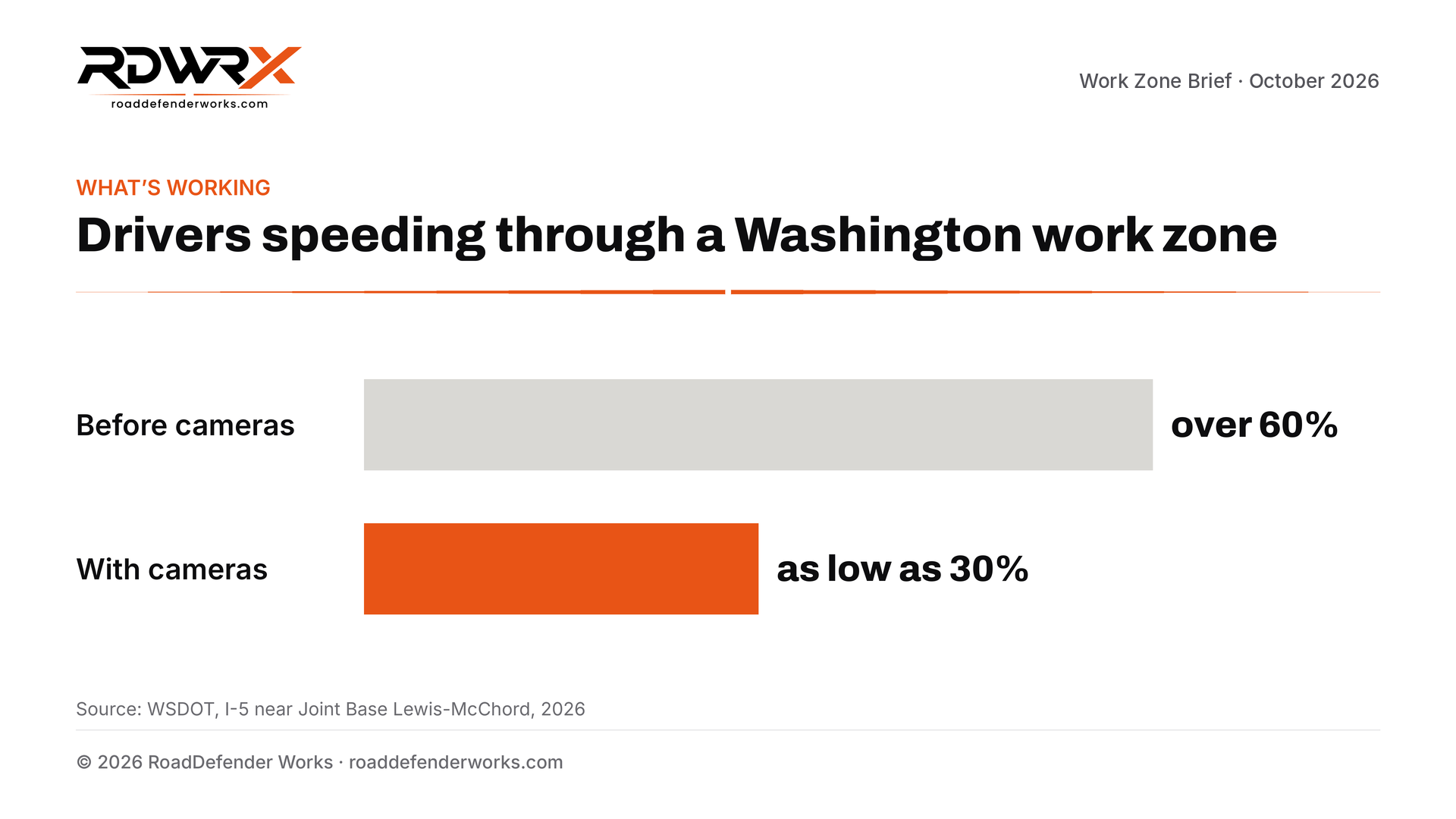
Before cameras went in on an I-5 work zone in Washington, what share of drivers were speeding through it?
See the answer
Over 60%. With cameras in place, the share dropped to as low as 30%. Kentucky took its own work zone cameras statewide in September.

Source: WSDOT
The gap
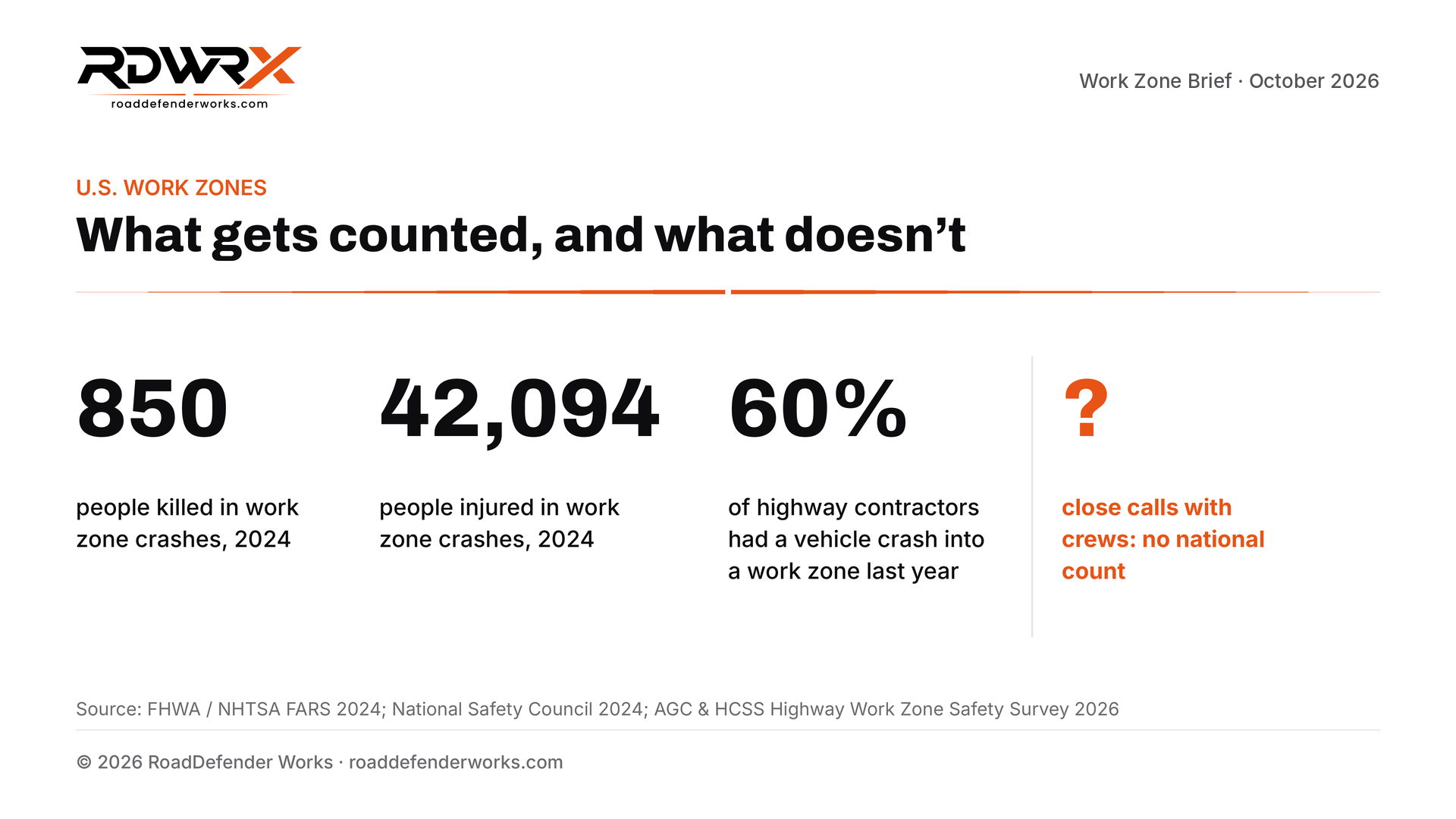
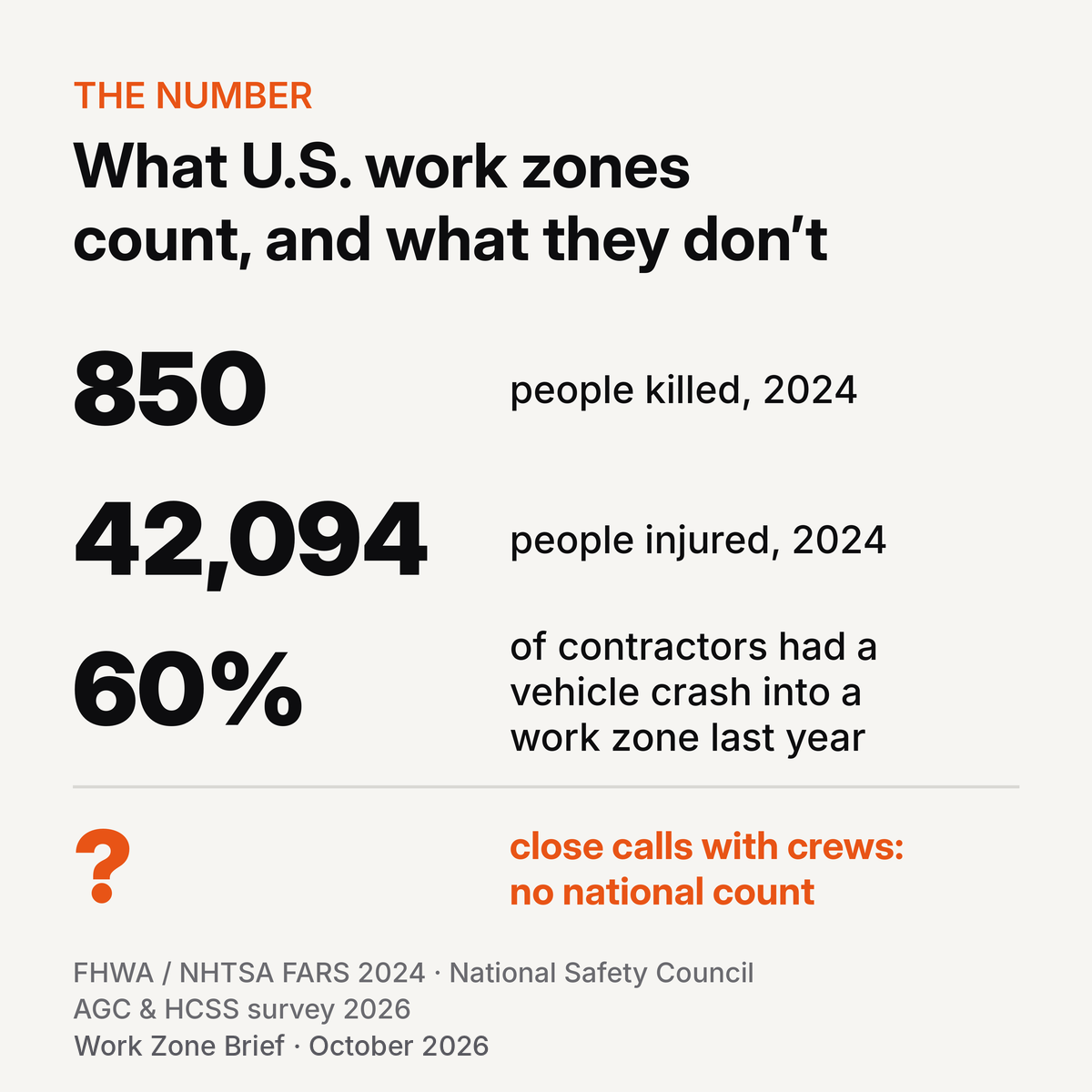
What's missing. Every work zone death and injury gets counted. Close calls with crews have no count at all.
Who carries it. The crew sees it first, and the safety program hears about it last, if at all. A close call that never gets written down can't shape the next job plan.
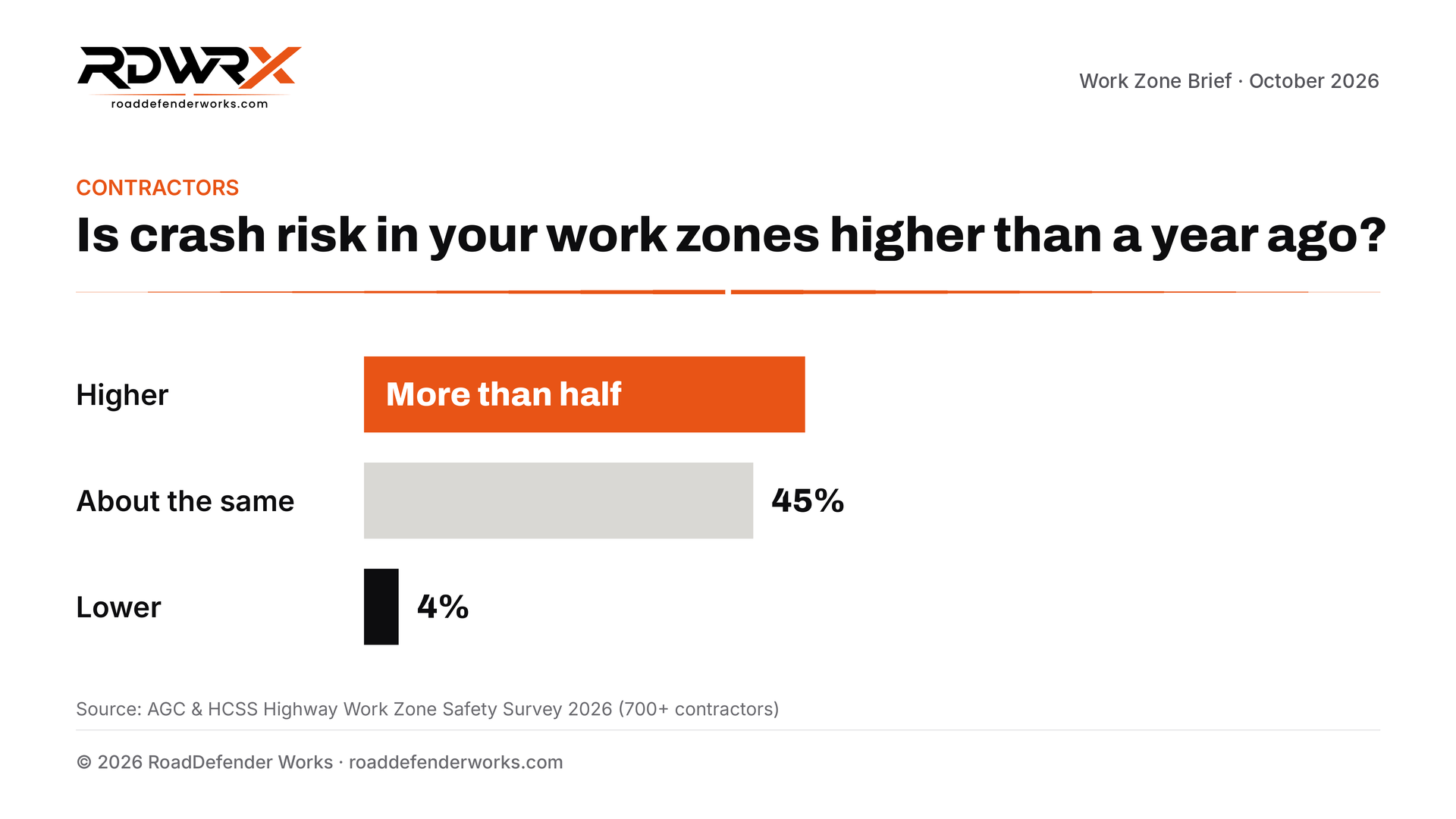
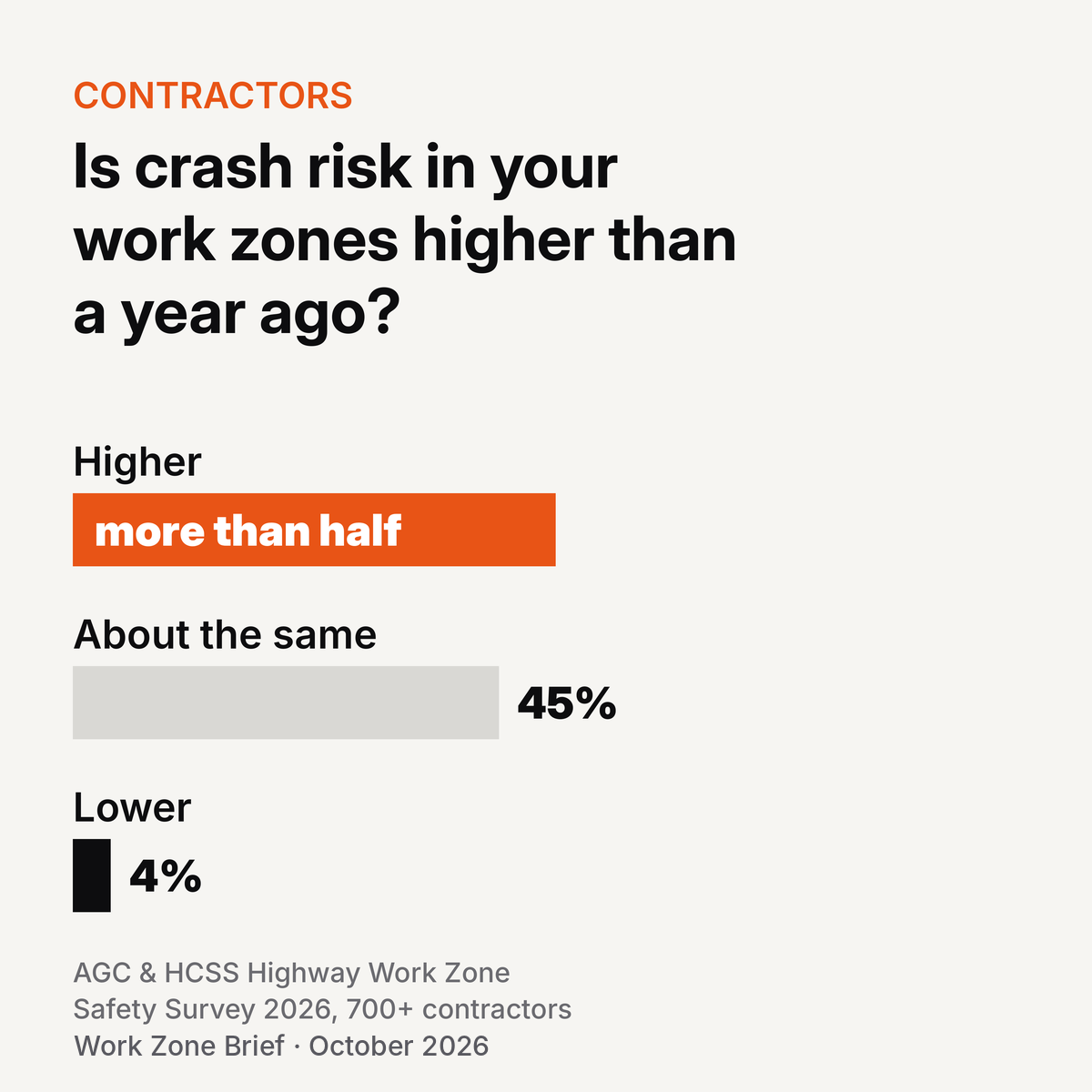
What it costs. Of contractors with a work zone crash last year, 27% had a crash that injured a worker. More than half of all contractors say crashes delayed their projects, many by several days. And a majority say the risk is higher than it was a year ago. AGC
What closing it looks like. Count the shift, not just the crash: a short record of when vehicles came too close, read every week by someone above the foreman. The updated federal rule already names exposure and surrogate data next to crash data.
What changed
States must comply with the updated federal work zone rule by December 31. Each state needs yearly safety measures, and the rule names exposure and surrogate data alongside crash data. Expect it to show up in 2027 plans and pay items. Federal Register
Kentucky took work zone speed cameras statewide in September. They run only while crews are present, and an officer reviews every alert. Washington's results are this month's guess. The Lane Report
MnDOT field-tested alerts worn by maintenance crews. Workers found them clear and comfortable to wear. Larger field tests are the next step. MnDOT research
Try this
Pull last year's incident log and count the entries that describe something that almost happened. If the answer is close to zero, the log is only seeing the end of the story.
One take
Most work zone tools watch traffic. Fewer ask what the worker knows in the moment. The new rule is a chance to start counting the shift, not just the crash.
Ask yourself
If a vehicle came too close to one of your crews yesterday, would anyone above the foreman know about it today?