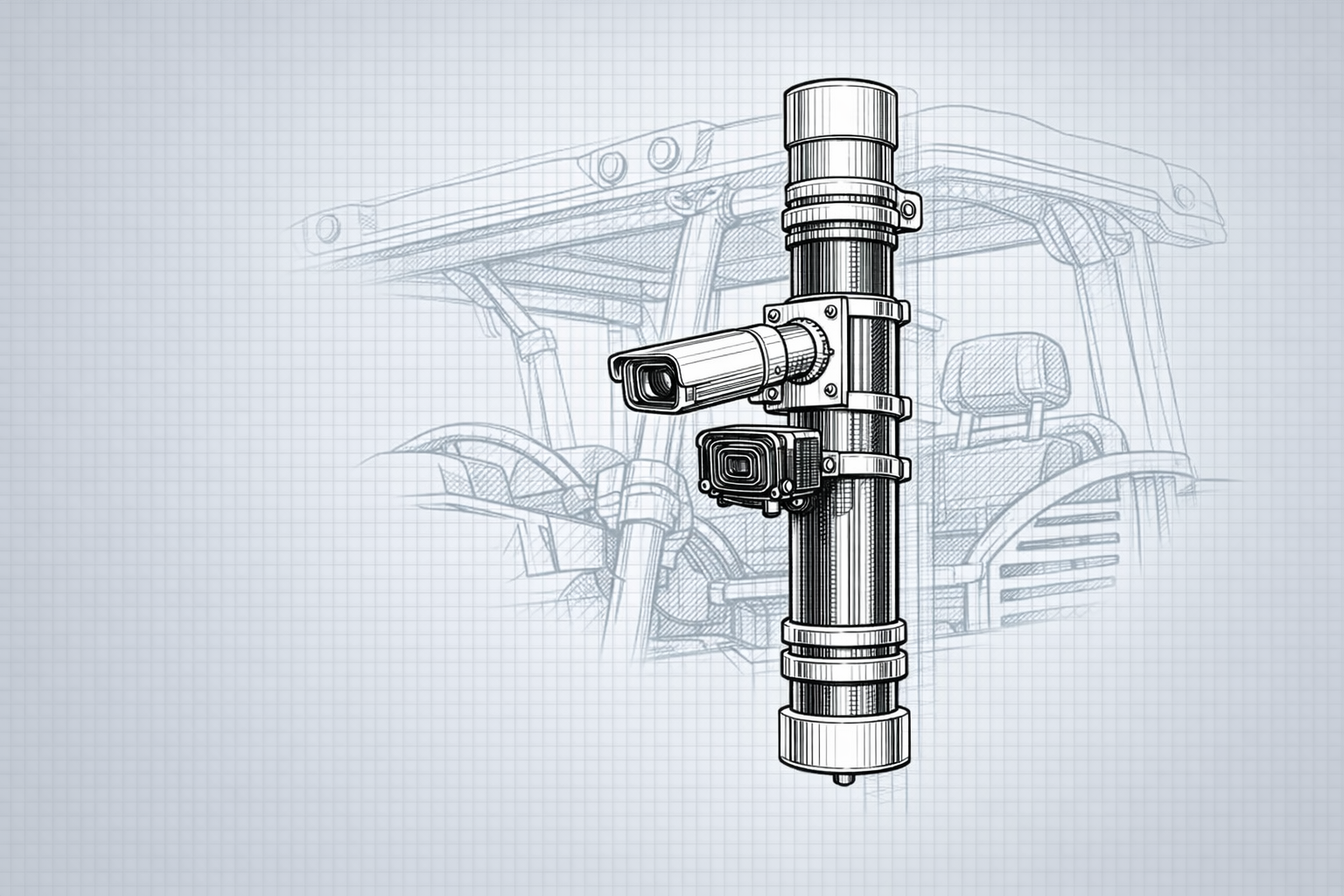
Hardware — RoadDefender Platform edge-first deployments

  • Edge Detection at the Perimeter — Detect and classify incoming traffic threats before they enter the active zone.
  • Live Work Zone Awareness — Share live safety context across crews, supervisors, and connected devices.
  • Inside-Zone Proximity Protection — Monitor worker–equipment interactions in real time to reduce close calls.
  • By processing on-site first, RoadDefender reduces latency and keeps protection available even with limited connectivity.

Key proof: Field validation and live deployments show the RoadDefender Platform operating across perimeter, work zone, and proximity risk layers.

View deployment context

RoadDefender processes safety intelligence at the edge to deliver low-latency awareness across perimeter, work zone, and proximity risk.

The RoadDefender Platform hardware layer is modular, deployable, and built for dynamic work zones, from fleet vehicle mounts to fixed perimeter installations.

Deployment Overview

What to Expect During Deployment

Most deployments are operational in under one shift. Here's what the process looks like — from first install to live coverage.

Typical Install

Who installs
RoadDefender-approved technicians or trained fleet maintenance personnel.
Where it mounts
Primary mode is vehicle/equipment mount (service trucks, fleet vehicles, mobile equipment); fixed perimeter mounting is available for static sites.
What a crew receives
  • Mounted RoadDefender sensing unit (radar baseline; camera AI module when selected)
  • Configured local alerting setup for edge-first operation
  • Wearables assigned to exposed roles
  • Quick-start handoff and verification checklist for supervisors

Deployment Realities

  • Mounts to fleet vehicles/equipment (primary mode) — designed to move with active crews and maintain protection as operations shift.
  • Works without cloud for alerting — detection and alerting run at the edge for immediate response; cloud remains optional for visibility and coordination.
  • Wearables issued to exposed roles — workers in higher-risk positions receive wearable alert devices as part of deployed coverage.

RoadDefender Platform Hardware Architecture

Scale edge-first protection without replacing hardware.

RoadDefender Platform hardware is built on a modular sensor architecture that lets operators start with essential detection and add advanced capability as perimeter, work zone, and proximity risk needs increase.

AI Add-On

Camera — AI Analytics Add-On

Context and behavior intelligence for complex conditions.

  • Lane position and drift detection
  • Swerve and erratic vehicle behavior recognition
  • Additional situational context for advanced deployments

Camera modules are included in higher protection levels such as Work Zone and Multi‑Site coverage.

Scale Path

Modularity in Practice

  • Start with Radar-only coverage for approach monitoring
  • Add Camera modules when AI behavior detection is needed
  • Scale coverage and capability without replacing the core system

This staged approach minimizes disruption while keeping protection aligned to real operating risk.

Capability Path

Upgrade Path by Protection Need

Start simple with radar, add AI camera analytics, then expand to coordinated multi-site coverage.

Radar Baseline detection Speed & approach monitoring Radar + Camera AI analytics enabled Lane position, swerve, behavior context Multi‑Node / Multi‑Site Operational‑scale coverage Coordinated alerts, shared awareness, optional cloud visibility

Start simple. Add capability as risk and coverage increase.

Optional Expansion

Optional Cloud for Multi-Site Visibility

For organizations operating across multiple sites, optional cloud connectivity provides a unified view of every deployment. Data flows from edge nodes at each site to a central cloud dashboard. This supports remote oversight, aggregated insights, and cross-site coordination without impacting real-time alert performance.

Local decisions by design: Detection and alerting happen at the edge for fast response, while cloud connectivity remains optional for visibility and coordination.

Flexible Deployment Modes

RoadDefender hardware is designed around how real crews operate in the field. The system is optimized for mobile, vehicle-based deployments, with support for fixed installations when worksites remain static.

Primary Deployment Mode (Default)

Fleet Vehicle / Equipment Mount

RoadDefender is designed to mount directly on fleet vehicles, mobile equipment, and service trucks. This configuration allows the protected zone to move with the crew, maintaining coverage during setup, active work, and repositioning without redeployment delays.

Best suited for

  • Moving work zones
  • Mobile construction and traffic control operations
  • Incident response and field services
For Static Sites

Fixed / Perimeter Installation

RoadDefender units can be installed at fixed locations where the operational area does not move. This deployment is appropriate for long-duration or static sites such as facility perimeters, gate approaches, or defined construction zones with predictable exposure patterns.

Best suited for

  • Static construction sites
  • Facility or site perimeters
  • Defined access points

Vehicle-mounted deployment is the default assumption; fixed installations are available where site conditions support them.

What's Included — By RoadDefender Platform Protection Level

Hardware capability scales with the Protection Level you choose. The cards below show how sensor configuration evolves from single-worker protection to multi-site enterprise deployments.

Inside-Zone Proximity Protection

Radar Wearable Alerts
Best for
Solo exposed roles in short-duration roadside tasks
Typical scenario
Monitor worker–equipment interactions in real time to reduce close calls.
Kit concept
Mobile sensing node + personal wearable + local alerting

Reduced Operational Disruption

Live Work Zone Awareness

Radar Wearable Alerts
Best for
Small teams operating around one moving work area
Typical scenario
Share live safety context across crews, supervisors, and connected devices.
Kit concept
Shared sensing coverage + role-based wearables + edge-delivered alerts

Improved Crew Coordination

Edge Detection at the Perimeter (ASL Flagship)

Radar Camera + AI Wearable Alerts
Best for
Active paving and lane-closure operations with higher vehicle approach risk
Typical scenario
Detect and classify incoming traffic threats before they enter the active zone.
Kit concept
Radar + Camera/AI + wearables + zone-based alert configuration

Faster Hazard Recognition

Multi‑Site Coverage (Enterprise)

Radar Camera + AI Wearable Alerts Optional Cloud
Best for
Organizations standardizing safety across multiple concurrent active sites
Typical scenario
Regional operations coordinating multiple crews and projects simultaneously
Kit concept
Replicated site kits + shared safety standards + optional cloud visibility

See multi-site deployment examples

Hardware quantities are not published publicly. Final scope is confirmed during a short scoping call.

Learn more: Visit the Protection Levels page to compare coverage options and request a quote.

Ready to Learn More?

Request a quote for an Early Access Deployment. We'll recommend the right protection level and hardware configuration during a short scoping call.